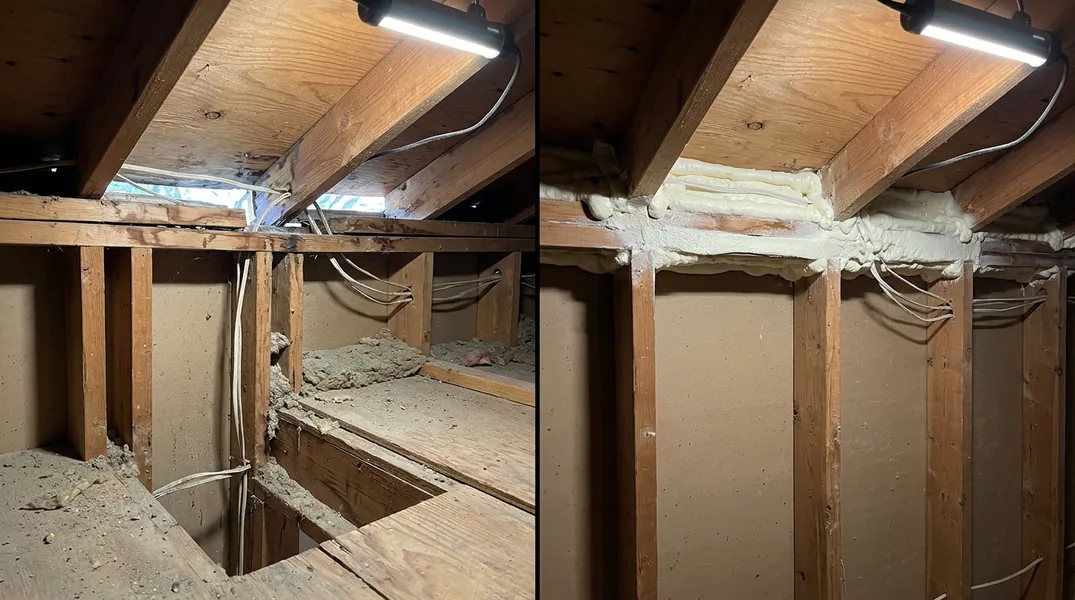
Understanding Spray Foam Insulation R-Value Per Inch
One of the most common questions homeowners ask is how much insulation value they're actually getting. The R-value measures thermal resistance, and it's critical to understand that not all insulation performs equally. Closed Cell Spray Foam Insulation delivers approximately 6.0 to 6.5 R-value per inch, making it one of the most efficient options available for attics and walls. In contrast, Open Cell Spray Foam Insulation typically provides 3.5 to 3.6 R-value per inch, which is still superior to fiberglass batts at around 3.2 to 3.8 per inch.
For homeowners in Cedar Rapids, understanding this difference matters significantly because our climate demands robust insulation performance. The higher R-value per inch of closed cell foam means you need less material to achieve the same thermal protection, which translates to better space efficiency in tight attic areas. This is especially valuable if your attic has limited height or irregular framing that makes traditional insulation installation challenging.
R-Value Requirements by State: What Iowa Homeowners Need to Know
Iowa's climate classification places Cedar Rapids in Climate Zone 5A, which comes with specific insulation recommendations. The U.S. Department of Energy recommends attic insulation levels of R-38 to R-60 for this zone, depending on whether you're heating with a heat pump or conventional systems. Most homeowners benefit from targeting R-49 to R-60 in attics to account for seasonal temperature swings that can reach minus 20 degrees Fahrenheit in winter and exceed 90 degrees in summer.
The reason these state-level requirements exist is simple: inadequate insulation leads to higher energy bills, uneven heating and cooling, and accelerated wear on HVAC systems. If your home currently has only R-20 insulation (common in older Cedar Rapids homes), you're losing significant heating and cooling energy. The good news is that Attic Spray Foam Insulation can help you reach these targets efficiently. With closed cell foam at 6.5 R-value per inch, you only need 7.5 to 9 inches to meet Iowa's recommendations, whereas fiberglass would require 14 to 18 inches of depth.
How Thick Should Spray Foam Be: Finding the Right Balance
The question of thickness isn't one-size-fits-all because it depends on your current insulation, your budget, and your performance goals. If you're starting from scratch with an uninsulated attic, you'll want to aim for the full R-49 to R-60 range recommended for Iowa. Using closed cell foam, this means applying 7.5 to 9 inches. However, if you already have some fiberglass or mineral wool insulation in place, you may only need 3 to 5 additional inches of spray foam to bridge the gap and seal air leaks simultaneously.
One critical advantage of spray foam is that it seals while it insulates. Unlike traditional batts, foam expands to fill gaps, cracks, and irregular spaces around pipes, wiring, and structural members. This air sealing component is why many contractors recommend spray foam even when supplementing existing insulation. The thickness you ultimately choose should balance your energy goals against your budget constraints. A professional energy audit can help determine the optimal thickness for your specific situation. Contact Cedar Rapids Spray Foam Insulation at (319) 774-1583 to discuss your attic's unique needs and receive a free estimate.
Air Sealing Versus Full Spray Foam: Which Does Your Home Need?
Not every home needs a full spray foam treatment, and an honest contractor will tell you that. Air sealing is the process of identifying and closing gaps, leaks, and thermal bypasses that allow conditioned air to escape. Common culprits include gaps around attic access hatches, unsealed rim joists, gaps where utilities penetrate the ceiling, and spaces between framing members. Many homes benefit enormously from targeted air sealing alone, which can reduce energy loss by 15 to 20 percent at a fraction of the cost of full foam insulation.
However, if your home suffers from both inadequate insulation depth and significant air leakage, air sealing alone won't solve the problem. This is where Attic Spray Foam Insulation becomes the more comprehensive solution. Spray foam accomplishes both goals simultaneously: it insulates to meet R-value requirements and seals air leaks in one application. For older homes in Cedar Rapids that may have settled framing, irregular cavities, or multiple thermal bypasses, spray foam often delivers better overall performance than traditional insulation plus separate air sealing.
The decision ultimately depends on your current insulation levels, your energy bills, and your long-term plans for the home. If your attic already has adequate depth of insulation but you're noticing cold spots or drafts, air sealing might be sufficient. If your insulation is thin, missing, or deteriorated, or if you're planning to stay in your home for many years, the comprehensive approach of spray foam insulation makes financial sense.
Insulation Tax Credits and Rebates: Making Your Investment More Affordable
Federal tax incentives for home energy improvements have made insulation upgrades more accessible than ever. The Inflation Reduction Act extended tax credits for qualified energy-efficient home improvements, including insulation. Depending on the specific materials and installation method, homeowners may qualify for up to 30 percent of project costs as a tax credit, with a maximum annual credit of $3,200 for insulation improvements. This means a $10,000 spray foam project could potentially reduce your tax liability by $3,000.
Beyond federal pricing incentives, many utility companies in Iowa offer local rebates for insulation upgrades. Alliant Energy and other regional providers frequently provide rebates ranging from $200 to $500 for attic insulation projects that meet their efficiency standards. Some programs also offer rebates specifically for air sealing work. Before beginning your project, contact your local utility to ask about current rebate programs. Cedar Rapids Spray Foam Insulation can help you navigate these opportunities and ensure your project qualifies for available incentives. Call us at (319) 774-1583 to discuss how tax credits and rebates can reduce your out-of-pocket costs.
It's important to note that tax credits and rebates often have specific requirements regarding contractor certification, material specifications, and installation standards. Working with an experienced local contractor ensures your project meets all criteria. When you request a free estimate, ask specifically about which incentives your project qualifies for, and we'll help you maximize your savings.
Attic Spray Foam Insulation Near Me: When to Call a Professional
Determining when to call a professional for spray foam insulation involves assessing several factors beyond just temperature and R-value. If you're experiencing noticeably higher heating bills in winter, uneven temperatures between rooms, or visible signs of moisture or pest damage in your attic, these are clear indicators that professional evaluation is needed. Many homeowners also notice that their HVAC system runs constantly without maintaining comfortable temperatures, which often signals inadequate insulation or significant air leakage.
Professional contractors bring specialized equipment, training, and safety protocols that DIY approaches cannot match. Spray foam application requires proper ventilation, protective equipment, and precise technique to achieve optimal performance and safety. Additionally, professionals can identify hidden issues like insufficient ventilation, mold growth, or structural damage that need addressing before insulation is installed. If you're in Cedar Rapids or nearby communities like Marion or Hiawatha, reaching out to Cedar Rapids Spray Foam Insulation for a professional assessment is the best first step. We'll evaluate your current insulation, identify air leaks, assess your R-value needs, and recommend the most cost-effective solution for your specific situation.
Looking for a professional spray foam insulation contractor in Cedar Rapids? Cedar Rapids Spray Foam Insulation responds fast for all your spray foam insulation needs.
Get a Free Quote