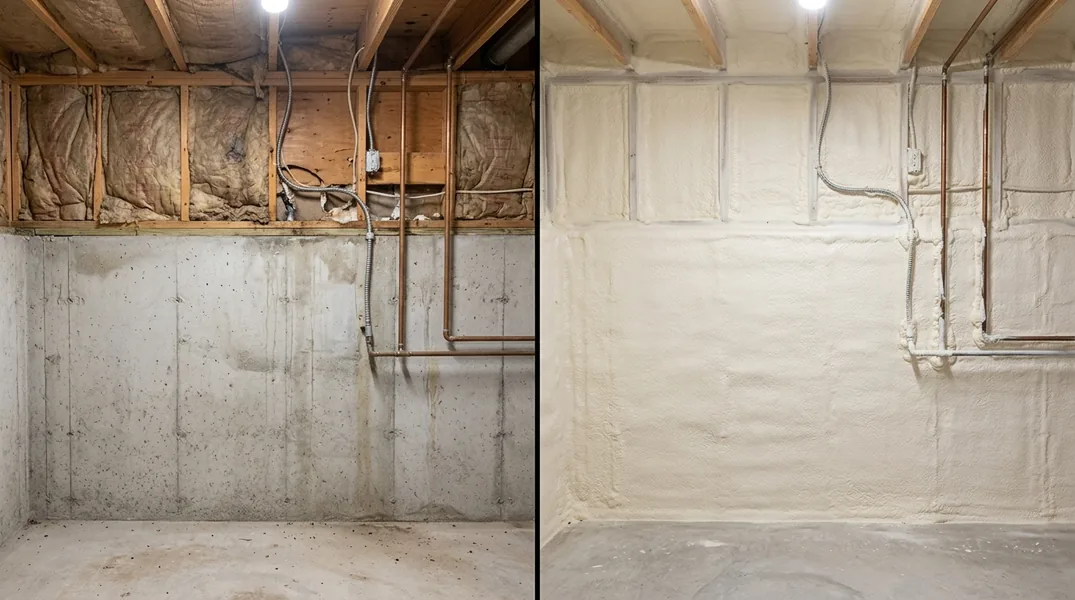
Understanding Spray Foam Insulation Types
When you're considering attic spray foam insulation for your Cedar Rapids home, one of the first decisions you'll face is choosing between open cell and closed cell spray foam. Both are effective insulation solutions, but they work differently and offer distinct advantages depending on your home's specific needs, climate conditions, and budget. Understanding these differences is essential for making an informed decision that will keep your home comfortable and energy-efficient for years to come.
Spray foam insulation has revolutionized how homeowners approach attic insulation. Unlike traditional fiberglass batts or blown-in cellulose, spray foam expands to fill gaps, cracks, and irregular spaces, creating an air-tight seal that dramatically reduces heat loss and air infiltration. This superior air-sealing capability makes spray foam one of the most effective insulation materials available today, which is why many Cedar Rapids homeowners are making the switch.
What Is Open Cell Spray Foam Insulation?
Open Cell Spray Foam Insulation is a softer, more flexible material that expands significantly after application. The cells in this foam are not completely enclosed, which means air and moisture can pass through the material. This characteristic makes open cell foam more breathable than its closed cell counterpart. It's often compared to a sponge because of its porous structure. When applied to your attic, open cell foam expands to fill spaces and hardens into a semi-rigid form that provides excellent thermal insulation while allowing some moisture vapor transmission.
One of the key advantages of open cell foam is its lower cost compared to closed cell options. This makes it an attractive choice for homeowners working within a tighter budget who still want the benefits of spray foam insulation. Open cell foam also has a lower density, which means it's lighter and won't add significant weight to your attic structure. Additionally, open cell foam provides excellent sound dampening properties, making it ideal if you're concerned about noise from outside or between rooms. The material is also less rigid, which can be beneficial in areas where slight expansion and contraction from temperature changes occur.
What Is Closed Cell Spray Foam Insulation?
Closed Cell Spray Foam Insulation is a denser, more rigid material where the cells are completely enclosed, creating a barrier that prevents air and moisture from passing through. This dense structure gives closed cell foam superior insulating properties, with R-values typically ranging from 6 to 7 per inch, compared to open cell's 3.5 to 4.5 per inch. Because it's more impermeable, closed cell foam acts as both an insulator and a vapor barrier, providing additional protection against moisture intrusion and air leakage. The material hardens into a rigid form that can actually add structural strength to your attic.
The primary trade-off with closed cell foam is its higher cost, which can be 50 to 100 percent more expensive than open cell options depending on the project scope and your location. However, many homeowners find the investment worthwhile because closed cell foam delivers superior thermal performance and provides better protection against moisture and air infiltration. Closed cell foam is particularly valuable in climates with significant moisture concerns or for homeowners seeking maximum energy efficiency and long-term performance. Its rigid structure also means it provides better structural support and can help prevent air leakage more effectively than open cell alternatives.
Climate Considerations for Cedar Rapids Homeowners
Cedar Rapids experiences a humid continental climate with cold, snowy winters and warm summers. This climate profile is an important consideration when choosing between open cell and closed cell spray foam. The region's significant temperature fluctuations and occasional moisture challenges mean that both insulation types have merit, but the choice depends on your specific situation and priorities. During winter months, temperatures can drop well below freezing, making thermal performance critical. During summer, humidity levels can be elevated, which can impact how your insulation performs over time.
For many Cedar Rapids homes, closed cell foam is often the preferred choice because it provides superior moisture resistance and higher R-values, which are essential for maintaining consistent indoor temperatures during harsh winters. However, if your attic is properly ventilated and you're primarily concerned with cost-effective insulation, open cell foam can work well too. The key is ensuring that whatever type you choose is installed correctly as part of a sealed attic insulation system. Proper installation creates an effective thermal envelope that prevents heat loss and reduces your energy bills throughout the year.
Unvented Attic Spray Foam: Why It Matters
One of the most significant advantages of spray foam insulation is the ability to create an unvented attic spray foam system. When spray foam is applied directly to the underside of your roof deck, it creates a continuous air barrier that prevents conditioned air from escaping. This approach is fundamentally different from traditional attic insulation methods that rely on ventilation. By sealing the attic space, you're essentially making your attic part of your home's conditioned envelope, which can lead to significant energy savings and improved comfort.
Unvented attic systems are particularly effective because they eliminate the temperature differential between your attic and living spaces. In traditional vented attics, your insulation must work harder to prevent heat transfer between the unconditioned attic space and your home below. With an unvented system using spray foam, your roof deck becomes the thermal boundary, and your HVAC system doesn't need to work as hard to maintain consistent temperatures. This is especially beneficial in Cedar Rapids, where winter heating demands are substantial. Additionally, unvented attic systems can help reduce moisture problems and provide better protection against air leakage, which is a leading cause of energy waste in most homes.
Attic Spray Foam Insulation Cost in Cedar Rapids: What to Budget
Understanding the pricing for spray foam insulation is crucial when planning your project. The cost of attic spray foam insulation varies based on several factors, including the size of your attic, the type of foam you choose, the thickness required for your climate zone, and the complexity of the installation. Open cell foam typically costs between $0.50 and $1.00 per board foot, while closed cell foam generally ranges from $1.00 to $1.50 per board foot or higher. For an average Cedar Rapids home with a 1,500 square foot attic, you might expect to invest anywhere from $3,000 to $8,000 or more depending on these variables.
While spray foam insulation represents a higher upfront investment compared to traditional insulation methods, the long-term energy savings and improved home comfort often justify the expense. Many homeowners recoup their investment through reduced heating and cooling costs within five to ten years. Additionally, spray foam can improve your home's resale value and may qualify for certain energy efficiency tax credits or rebates. The best way to understand the true cost for your specific situation is to contact Cedar Rapids Spray Foam Insulation for a detailed evaluation. We can assess your attic, discuss your priorities, and provide a transparent quote that outlines exactly what you'll receive for your investment.
Choosing the Right Option for Your Home
The decision between open cell and closed cell spray foam ultimately depends on your specific needs, budget, and goals. If you're prioritizing maximum energy efficiency, superior moisture protection, and long-term performance, closed cell foam is the better choice despite its higher cost. If you're looking for a cost-effective solution that still provides excellent insulation and air sealing benefits, open cell foam can be an excellent option. Consider your home's age, current insulation condition, moisture history, and your climate control priorities when making this decision.
We recommend scheduling a free estimate with Cedar Rapids Spray Foam Insulation so our experienced professionals can evaluate your attic and provide personalized recommendations. During this consultation, we'll discuss both options in detail, explain how each would perform in your specific situation, and help you understand the long-term implications of your choice. You can reach us at (319) 774-1583 to schedule your evaluation. Our team has extensive experience with spray foam insulation projects throughout the Cedar Rapids area, and we're committed to helping you make the best decision for your home's comfort and efficiency.
Looking for a professional spray foam insulation contractor in Cedar Rapids? Cedar Rapids Spray Foam Insulation responds fast for all your spray foam insulation needs.
Get a Free Quote