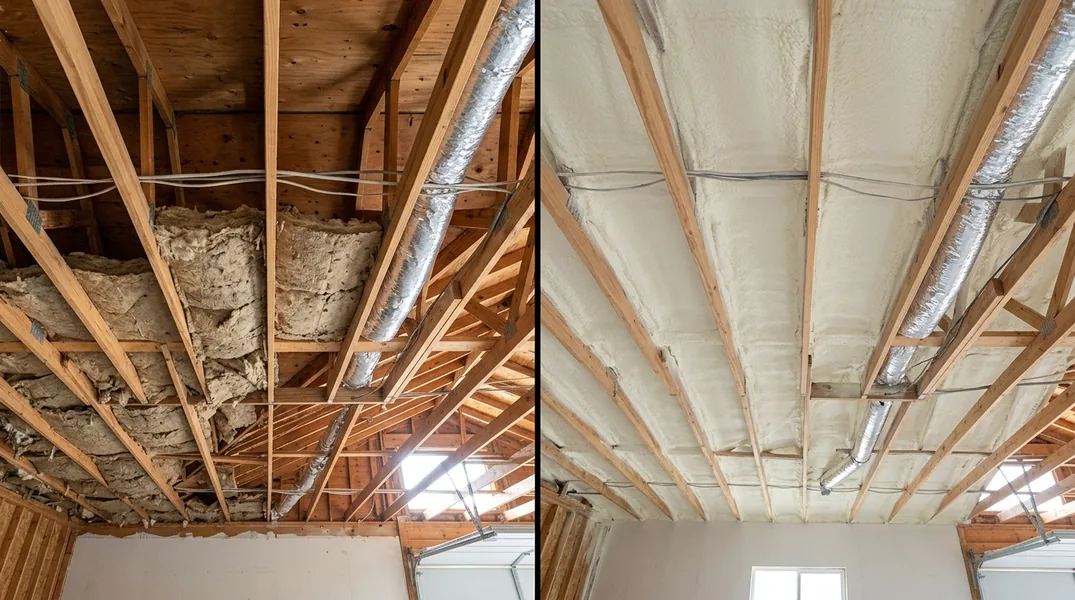
Understanding Spray Foam Permit Requirements in Cedar Rapids
Before you invest in Attic Spray Foam Insulation for your home, it's important to understand the local permitting process. Cedar Rapids has specific building codes and permit requirements that apply to spray foam insulation projects. These regulations exist to ensure that your installation meets safety standards, fire codes, and energy efficiency guidelines that protect both your home and your family.
Most spray foam insulation projects in Cedar Rapids will require a permit from the city's building department. The permit process typically involves submitting plans, specifications about the foam type you're using, and details about the application area. Your contractor should be familiar with these local requirements, but as a homeowner, understanding what's involved helps you make informed decisions and avoid delays. The permit ensures that your project complies with current building codes and that the work will be inspected by qualified professionals to verify proper installation.
Open Cell vs Closed Cell Spray Foam: What's the Difference?
One of the most critical decisions you'll make when planning your spray foam project is choosing between Open Cell Spray Foam Insulation and Closed Cell Spray Foam Insulation. These two types have fundamentally different structures and performance characteristics that will affect your home's energy efficiency, moisture control, and long-term durability. Understanding the differences between open cell vs closed cell spray foam is essential before you pull a permit, because your choice will influence the inspection requirements and the final outcome of your project.
Open Cell Spray Foam Insulation has a lower density and a softer structure that allows air and moisture to pass through the material. This type is more affordable and provides excellent sound dampening, making it popular for interior applications. However, open cell foam is more permeable, which means it requires proper vapor barriers in certain climates. Closed Cell Spray Foam Insulation, on the other hand, has a denser structure with cells that are completely sealed. This creates a superior moisture barrier and makes closed cell foam ideal for areas prone to moisture intrusion, such as basements or crawl spaces. Closed cell foam is more expensive but offers better structural support and superior insulation performance in challenging environments.
Spray Foam R Value: Understanding Insulation Performance
When evaluating spray foam options for your Attic Spray Foam Insulation project, understanding R-value is crucial. R-value measures the thermal resistance of insulation, and higher R-values mean better insulation performance. The spray foam R value varies significantly between open cell and closed cell options, and knowing these differences helps you understand what you're getting for your investment. Your building permit application will likely require documentation of the R-value you're achieving, as Cedar Rapids building codes specify minimum insulation requirements based on your climate zone.
Open Cell Spray Foam typically delivers an R-value of approximately 3.5 to 3.8 per inch of thickness. This means you'd need roughly 8 to 10 inches of open cell foam to achieve an R-30 rating, which is common for attic insulation. Closed Cell Spray Foam offers superior performance, with a closed cell spray foam R value of approximately 6 to 7 per inch. This higher performance means you can achieve the same R-value with significantly less material, which is why closed cell foam is often preferred for spaces where thickness is limited or where maximum insulation value is needed in a compact area. Understanding these differences helps you determine which option makes sense for your specific application and budget.
Fire Safety and Building Code Compliance
Fire safety is a major concern when installing spray foam insulation, and it's one of the primary reasons that permits and inspections are required. Both open cell and closed cell spray foams must meet specific fire safety standards, but they're treated differently under building codes. When you pull a permit for your spray foam project, the inspector will verify that the foam type you're using meets the appropriate fire ratings and that it's properly covered with an ignition barrier if required by code. This is especially important in attic spaces where the foam may be exposed.
Most building codes require that spray foam insulation be covered with a thermal barrier, typically drywall or other approved materials, if the foam is in an occupied space or easily accessible. The type of barrier required may depend on whether you're using open cell or closed cell foam, as different foam types have different fire ratings. Your permit application should clearly document the fire safety measures you'll be taking, including the type of thermal barrier that will be installed. This isn't just bureaucratic red tape; these requirements protect your home and family in case of fire. Working with a knowledgeable contractor who understands these requirements ensures that your installation will pass inspection and provide the safety protection you need.
Attic Spray Foam Insulation Cost in Cedar Rapids: What to Budget
Cost is naturally a major consideration when planning any home improvement project, and understanding spray foam insulation pricing helps you budget appropriately. The total cost of your project depends on several factors, including the square footage of the area being insulated, the type of foam you choose, and the complexity of the installation. Open cell foam is generally less expensive than closed cell foam, but closed cell foam delivers superior performance and may offer better long-term value depending on your climate and application. Before pulling a permit, it's wise to get a clear understanding of what the project will cost and what that investment includes.
When comparing costs, remember that the cheapest option isn't always the best choice. A lower-cost open cell foam installation might require more material to achieve the same R-value as closed cell foam, and it may not provide the same moisture protection in certain applications. Additionally, permit fees, inspection costs, and any necessary vapor barriers or thermal barriers should be factored into your total budget. The best way to understand the true cost of your project is to contact Cedar Rapids Spray Foam Insulation for a detailed free estimate. We can evaluate your specific situation, explain the differences between foam types, and provide transparent pricing that includes all necessary components for a successful, code-compliant installation.
Working with Your Contractor Through the Permit Process
Your spray foam contractor should handle most of the permit and compliance details, but it's helpful to understand what's involved. A reputable contractor will be familiar with local building codes and permit requirements, and they should be able to guide you through the process smoothly. Before hiring anyone, verify that they're insured, and experienced with projects in your area. They should be able to clearly explain the permit process, answer questions about open cell vs closed cell spray foam, and help you understand the spray foam R value specifications that apply to your project.
When you're ready to move forward, contact Cedar Rapids Spray Foam Insulation at (319) 774-1583 to discuss your project. We have extensive experience with local permitting requirements and can ensure that your installation meets all applicable codes and standards. Whether you're interested in Attic Spray Foam Insulation, Closed Cell Spray Foam Insulation, or Wall & Injection Foam Insulation, we'll work with you every step of the way to make sure your project is completed properly and passes all inspections. Let us help you make an informed decision about your spray foam insulation needs.
Looking for a professional spray foam insulation contractor in Cedar Rapids? Cedar Rapids Spray Foam Insulation responds fast for all your spray foam insulation needs.
Get a Free Quote